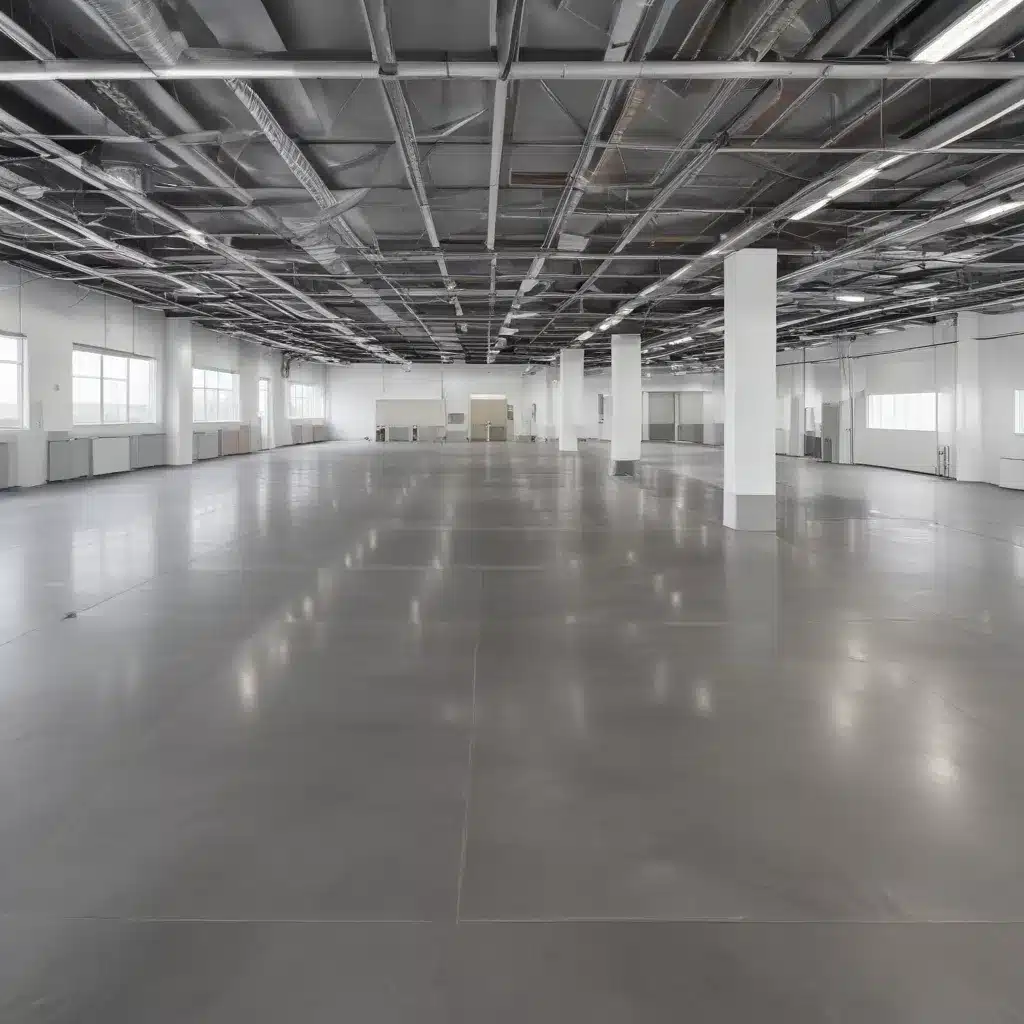
Raised access flooring systems play a pivotal role in the design and operation of mission-critical facilities, such as data centers, control rooms, and healthcare environments. These sophisticated floor solutions not only provide a robust and flexible understructure but also enable the precise management of airflow and cooling—two crucial elements for ensuring equipment reliability and energy efficiency.
Structural Integrity and Load Capacity
The foundation of a successful raised access flooring system lies in its structural integrity and load-bearing capacity. Load capacity considerations are paramount, as mission-critical facilities often house heavy server racks, networking equipment, and other IT infrastructure that can exert significant weight on the floor.
Pedestal design and adjustment are key factors in ensuring the system can withstand these loads. Adjustable pedestals with a wide range of height settings allow for precise leveling, accommodating uneven subfloors and maintaining a stable, uniform surface. The pedestal’s construction, material, and connection to the subfloor must be engineered to provide the necessary structural support.
Equally important is the subfloor construction and support, which forms the foundation for the raised access flooring. A well-designed subfloor, often incorporating a reinforced concrete slab or a steel frame, distributes the load evenly and prevents deflection or sagging over time.
Airflow and Cooling Optimization
Effective airflow management is the cornerstone of mission-critical facility cooling, and raised access flooring systems play a crucial role in this process. Underfloor air distribution allows cool air to be channeled directly to the equipment, maximizing cooling efficiency and preventing hot spots.
The design of perforated floor tiles is instrumental in this strategy. These tiles, strategically placed throughout the raised floor, feature precisely engineered perforations that direct the cool air upward, precisely where it’s needed most. By controlling the airflow patterns, perforated tiles help maintain consistent temperatures across the entire facility.
Careful plenum management and pressurization within the underfloor space is also essential. Balancing the air pressure and ensuring an unobstructed path for the cold air to reach the equipment helps prevent the mixing of hot and cold air, a common challenge in data centers and other mission-critical environments.
Cabling and Cable Management
One of the key advantages of raised access flooring is the ability to seamlessly integrate power and data cable routing within the underfloor space. This approach separates the cabling infrastructure from the occupied space above, reducing clutter and creating a more organized and accessible environment.
Raised floors offer horizontal and vertical cable pathways, enabling efficient cable management and easy access for maintenance and reconfiguration. The integration of cable trays and raceways into the flooring system further enhances cable organization and protects sensitive wiring from damage.
Energy Efficiency and Sustainability
Raised access flooring systems can contribute significantly to the energy efficiency and sustainability of mission-critical facilities. The thermal insulation properties of the floor panels and the underfloor space help minimize heat transfer, reducing the overall cooling load and energy consumption.
Passive cooling strategies, such as utilizing the underfloor plenum for air circulation, can further enhance the system’s energy efficiency. By minimizing the reliance on active cooling systems, these approaches help reduce the facility’s carbon footprint and operating costs.
Compliance with industry standards and regulatory certifications, such as the BSEN 12825 standard for raised access floors, ensures that the system meets stringent performance and safety requirements, contributing to its long-term sustainability.
Accessibility and Adaptability
The modular design of raised access flooring systems offers unparalleled accessibility and adaptability. Easily removable flooring panels allow for quick and tool-less access to the underfloor space, facilitating maintenance, equipment upgrades, and infrastructure changes.
The adjustable pedestal heights enable the floor to be raised or lowered as needed, accommodating changes in equipment, cabling, or other facility requirements. This flexibility ensures that the raised access flooring system can seamlessly adapt to the evolving needs of mission-critical environments.
Installation and Maintenance
Proper site preparation and leveling is crucial for the successful installation of raised access flooring systems. Ensuring a stable and even subfloor lays the foundation for the entire system, allowing for the precise placement and securement of the flooring panels.
Ongoing inspection, cleaning, and repair procedures are essential to maintain the system’s long-term performance and integrity. Regular maintenance, such as removing dust and debris from the underfloor space and addressing any panel or pedestal issues, helps ensure optimal airflow, cooling efficiency, and equipment protection.
Applications in Mission-Critical Facilities
Raised access flooring systems are widely adopted in a variety of mission-critical facilities, each with its unique requirements and challenges. Data centers and server rooms require meticulous airflow management and cooling to safeguard the continuous operation of critical IT infrastructure.
Control rooms and command centers demand a secure, reliable, and adaptable floor solution to support sensitive equipment and accommodate evolving technology needs. Similarly, healthcare and research facilities depend on raised floors to maintain a clean, sterile environment while providing the necessary infrastructure for advanced medical equipment and diagnostic tools.
Benefits of Advanced Raised Flooring
The implementation of advanced raised access flooring systems in mission-critical facilities offers a multitude of benefits, including:
- Improved Thermal Management: Precise airflow control and cooling optimization ensure consistent temperatures, preventing equipment overheating and enhancing reliability.
- Enhanced Flexibility and Scalability: The modular design and adjustable features allow for easy reconfiguration, expansion, and adaptation to changing facility requirements.
- Reduced Energy Consumption and Costs: Efficient airflow management, passive cooling strategies, and thermal insulation properties contribute to significant energy savings and a lower carbon footprint.
By seamlessly integrating these capabilities, raised access flooring systems play a pivotal role in the design and operation of mission-critical facilities, safeguarding the continuous and efficient functioning of essential digital infrastructure. To learn more about the latest advancements in raised flooring, visit raised-flooring.co.uk.

