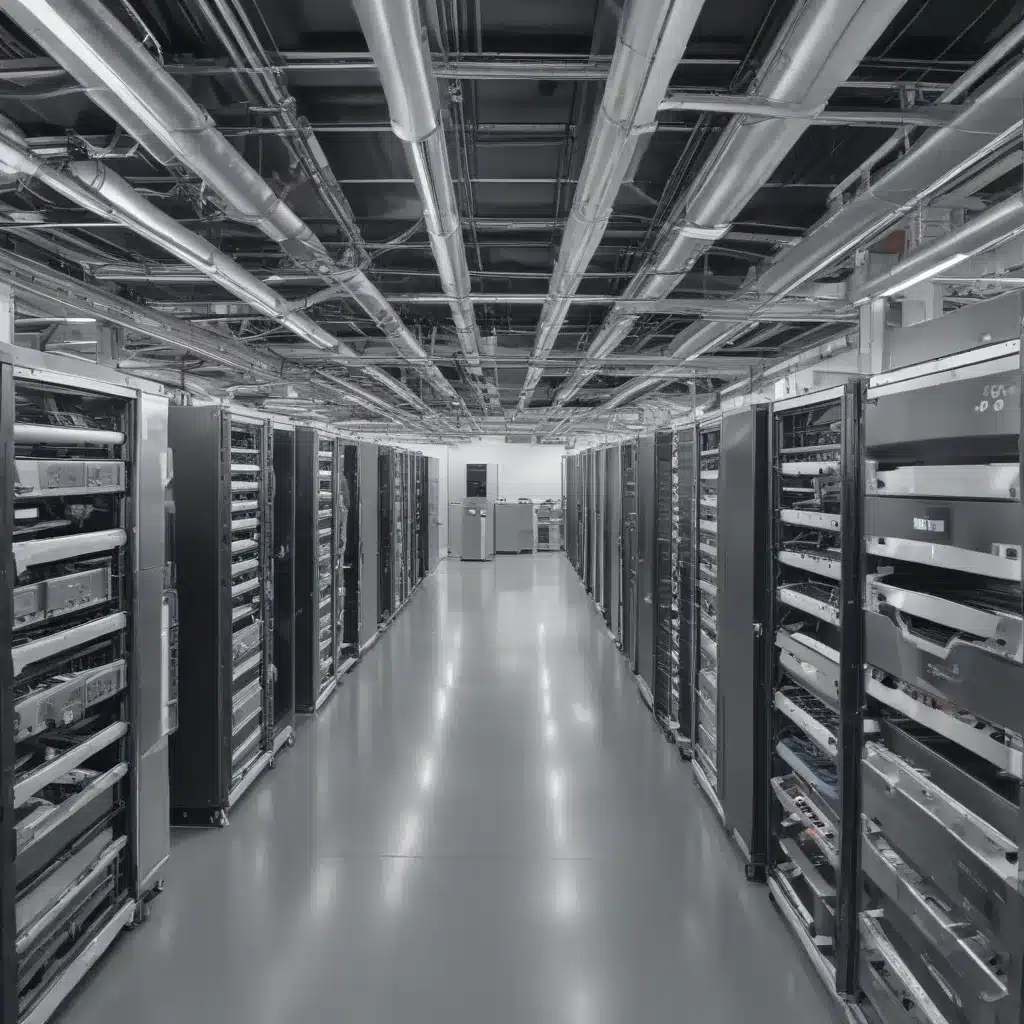
Optimising Airflow and Cooling in Raised Floors for High-Density Edge Computing and IoT Applications in Automated Factories
As an experienced raised flooring consultant for Raised Flooring UK, I’ve had the privilege of working with businesses across the country to design, install, and maintain high-performance access flooring systems. One area that has become increasingly crucial is optimising airflow and cooling for the deployment of edge computing and IoT technologies in automated factory environments.
Raised Access Flooring for High-Density Applications
Raised access flooring provides a versatile and adaptable foundation for modern commercial and industrial facilities. By elevating the primary floor, these systems create a concealed plenum space that can accommodate power, data, and cooling infrastructure. This underfloor pathway not only streamlines cable management but also enables precise airflow control – a critical requirement for cooling high-density IT equipment.
Load Capacity and Structural Integrity
When specifying raised access flooring for edge computing and IoT deployments, load-bearing capacity is a primary consideration. These applications often involve high-density server racks and networking enclosures, which can exert substantial concentrated loads on the floor. Raised flooring systems must be engineered to withstand these demands without compromising structural integrity.
Raised access floor panels are typically constructed with a metal (often steel) top surface and a reinforced core, supported by adjustable pedestals. The panel design and pedestal spacing must be carefully calculated to achieve the required static and dynamic load capacities. This ensures the floor can safely support the anticipated equipment weight, as well as any potential point loads from forklifts or maintenance activities.
Underfloor Airflow Management
Beyond load-bearing performance, the airflow dynamics of the raised floor plenum are essential for effective cooling of high-density IT equipment. The underfloor space acts as a pressurised air supply plenum, delivering conditioned air upward through strategically placed perforated floor tiles. This allows precise targeting of airflow to server racks and other heat-generating components.
Optimising this airflow system is crucial, as inefficiencies can lead to hot spots, wasted energy, and inadequate cooling capacity. Raised flooring consultants work closely with HVAC engineers to model the airflow patterns, identify potential airflow obstructions, and implement best practices for cable management, tile selection, and plenum partitioning.
High-Density Edge Computing and IoT in Automated Factories
The rise of edge computing and the Internet of Things (IoT) has had a profound impact on the data infrastructure requirements within modern automated factories. These environments demand high-performance, low-latency computing power to support real-time analytics, machine learning, and control systems.
Cooling Challenges in High-Density Environments
As edge computing and IoT deployments become more prevalent, server rack densities have increased dramatically. This poses significant challenges for traditional air-cooling approaches, as the heat output per square metre can quickly exceed the capacity of standard HVAC systems.
Addressing these cooling requirements is essential, as overheating can lead to equipment failures, performance degradation, and even safety hazards in automated factory settings. Raised access flooring plays a crucial role in enabling targeted, high-efficiency cooling strategies to support these high-density deployments.
Vibration and Environmental Factors
In addition to cooling, automated factory environments present other unique considerations for raised access flooring. Factors such as vibration, shock, and corrosive atmospheres can pose challenges for the structural integrity and long-term performance of the access floor system.
Raised flooring consultants must work closely with factory operators to understand the specific environmental conditions and implement reinforced designs, vibration-dampening measures, and corrosion-resistant materials as needed. This ensures the access floor can withstand the rigours of the industrial setting while maintaining the necessary airflow and cooling capabilities.
Maintenance and Lifecycle Management
Maintaining the optimal performance of a raised access flooring system in a high-density, mission-critical environment is essential. Regular inspections, preventive maintenance, and strategic lifecycle planning are critical to ensuring the long-term reliability and efficiency of the system.
Accessibility and Serviceability
One of the key advantages of raised access flooring is the ability to easily access the concealed power, data, and cooling infrastructure. This allows for efficient servicing and upgrades without disrupting ongoing operations. Consultants work with facility managers to develop maintenance protocols that prioritise quick access and minimal downtime.
Tile replacement is another crucial aspect of raised floor maintenance. Damaged, worn, or poorly performing tiles must be swiftly identified and replaced to maintain the integrity of the airflow management and load-bearing capabilities. Raised flooring experts can provide guidance on tile selection, installation techniques, and inventory planning to streamline this process.
Regulatory Compliance and Sustainability
In the UK, raised access flooring systems must adhere to BSEN 12825 and other relevant regulatory standards. These guidelines cover aspects such as load capacity, fire resistance, and environmental performance. Raised flooring consultants ensure that all system components and installation practices meet these stringent requirements, protecting the safety and compliance of the facility.
Additionally, as sustainability becomes an increasingly important consideration, raised flooring solutions are well-positioned to contribute to energy efficiency and reduced environmental impact. Modular design, the use of recycled materials, and the ability to reconfigure the floor plan can all support broader green initiatives within the automated factory.
Conclusion
Optimising airflow and cooling in raised access flooring systems is crucial for the successful deployment of high-density edge computing and IoT technologies within automated factory environments. By leveraging the versatility and adaptability of raised flooring, businesses can create a foundation that supports the specific power, cooling, and environmental requirements of these mission-critical applications.
Through close collaboration with raised flooring experts, facility managers can ensure their automated factories are equipped with robust, efficient, and sustainable access floor solutions that deliver the performance, reliability, and long-term value required in today’s rapidly evolving industrial landscape. For more information, please visit raised-flooring.co.uk.Example: London Cloud Provider Expansion

