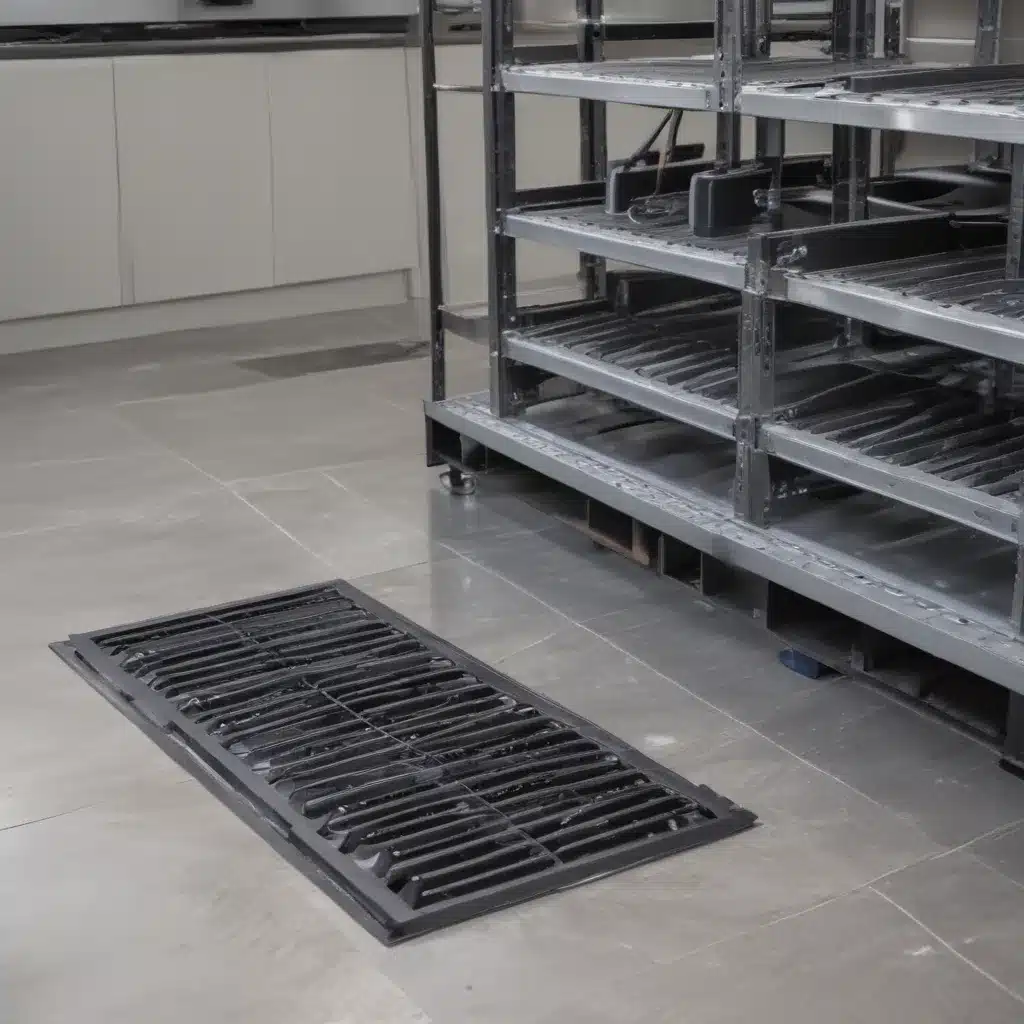
As an experienced raised flooring consultant, I’ve seen first-hand the crucial role that ventilation plays in optimizing the cooling performance of modern data centers and server rooms. Gone are the days of relying solely on traditional air conditioning units – today’s advanced raised flooring systems integrate innovative airflow management strategies to ensure optimal temperature regulation and energy efficiency.
In this comprehensive article, I’ll explore the latest developments in raised flooring ventilation, highlighting design techniques, installation best practices, and maintenance considerations to help you create a state-of-the-art cooling infrastructure for your commercial or office environment.
Structural Design and Load Capacity
At the heart of any raised flooring system lies its structural integrity. The load-bearing capacity of the access floor is a critical factor in determining its suitability for housing heavy server racks and IT equipment. Raised floors typically utilize a grid of height-adjustable access floor pedestals that support lightweight yet durable steel encapsulated panels. By carefully engineering the pedestal and panel composition, we can achieve impressive weight-bearing capabilities of up to 1,350 lbs per square foot.
Beyond just weight management, the pedestal adjustment feature allows for fine-tuning the floor height to accommodate varying equipment sizes and cabling requirements. This flexibility is essential for creating an airflow-optimized subfloor plenum – the void space beneath the raised floor that serves as a conduit for cool air circulation.
Airflow and Ventilation
Effective ventilation is the cornerstone of any efficient server cooling strategy. In a raised flooring system, the subfloor plenum plays a crucial role in airflow optimization. By strategically placing perforated floor tiles over server racks and equipment, we can direct cool air exactly where it’s needed most, creating a targeted cooling effect.
The depth and design of the subfloor plenum also significantly impact airflow dynamics. Taller plenums (typically 600-800mm) allow for greater air volume and velocity, while thoughtful placement of airflow baffles and vents can minimize turbulence and ensure an even distribution of cooled air throughout the space.
One innovative approach we’ve seen is the integration of computational fluid dynamics (CFD) analysis to model and simulate airflow patterns. This data-driven optimization technique helps identify potential hotspots and airflow bottlenecks, allowing us to fine-tune the raised flooring design for maximum cooling efficiency.
Cable and Wire Management
An often-overlooked aspect of raised flooring ventilation is the role of cable and wire management. Haphazard cabling can create airflow obstructions and disrupt the carefully engineered airflow patterns within the subfloor plenum.
That’s why it’s crucial to incorporate cable raceways and structured routing pathways into the raised flooring design. This not only keeps cabling organized and accessible but also ensures unimpeded airflow throughout the system. Additionally, the use of electromagnetic interference (EMI) shielding within the raceways can help mitigate potential disruptions to sensitive IT equipment.
Regular maintenance and accessibility are also key. Raised flooring systems should be designed with easy panel removal and flexible cabling configurations to simplify the addition, modification, or reconfiguration of IT infrastructure over time.
Environmental Monitoring and Control
Maintaining the optimal temperature and humidity levels within a data center or server room is essential for ensuring the longevity and reliable performance of mission-critical equipment. Raised flooring systems can play a pivotal role in this environmental control process.
By integrating temperature and humidity sensors throughout the subfloor plenum and server racks, facility managers can gain real-time visibility into the environmental conditions. This data can then be leveraged to automate climate regulation, adjusting airflow, cooling, and ventilation as needed to maintain the target parameters.
Importantly, these environmental monitoring and control systems must be designed with energy efficiency in mind. Leveraging advanced algorithms and predictive analytics, raised flooring solutions can optimize cooling outputs to match the dynamic load requirements, reducing overall energy consumption and operational costs.
Standards and Regulatory Compliance
When it comes to raised flooring systems, adherence to industry standards and regulatory compliance is non-negotiable. In the UK, key guidelines such as the BSEN 12825 (Raised Access Floors) and the PSA MOB PF2 PS/SPU (Performance Specification for Raised Access Floors) provide the framework for ensuring structural integrity, fire safety, and environmental sustainability.
Beyond these local standards, the raised flooring industry is also aligning with broader green computing initiatives and International Organization for Standardization (ISO) guidelines. This includes considerations around energy efficiency, material sourcing, and waste management – all of which are crucial for minimizing the environmental impact of data centers and server rooms.
By staying up-to-date with the latest regulatory requirements and sustainability best practices, raised flooring consultants can help clients future-proof their facilities and position them as industry leaders in responsible IT infrastructure management.
Conclusion
In the ever-evolving landscape of commercial and office environments, raised flooring systems have emerged as a pivotal component of efficient server cooling and data center management. By integrating innovative airflow optimization strategies, strategic cable and wire management, and intelligent environmental monitoring and control, raised flooring solutions are enabling organizations to achieve new levels of energy efficiency, cost savings, and regulatory compliance.
As an experienced raised flooring consultant, I’ve had the privilege of working with clients across the UK to design and install cutting-edge raised flooring systems that deliver tangible benefits in terms of cooling performance, equipment reliability, and sustainable operations. If you’re interested in exploring how raised flooring can transform your data center or server room, I encourage you to visit our website or reach out to our team of experts. Together, we can build a future-proof cooling infrastructure that keeps your IT systems running at their best.

