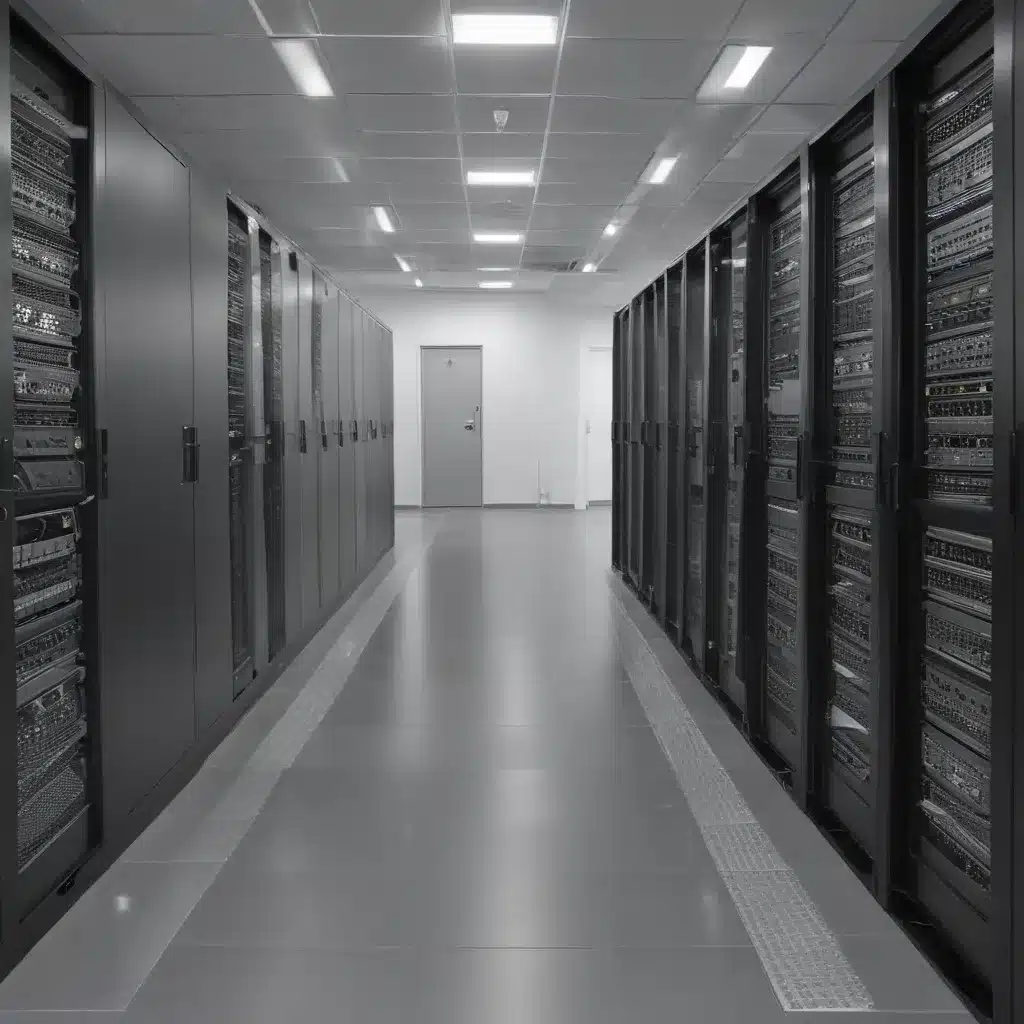
Optimising Ventilation with Raised Access Floors: Strategies for UK Data Centres
As an experienced raised flooring consultant, I’ve had the privilege of working with numerous commercial clients across the UK to design, install, and maintain robust access flooring solutions. One of the key applications where raised access floors truly shine is in modern data centre environments – spaces that demand uncompromising climate control, cable management, and operational resilience.
Structural Considerations
At the core of any high-performing raised access floor system is its structural integrity. The load-bearing capacity of the access floor is a critical specification that must be carefully assessed based on the unique requirements of the data centre. Heavier server racks, heavy-duty HVAC equipment, and the sheer volume of cabling all contribute to significant static and dynamic loads that the access floor must be able to safely support.
Alongside load capacity, the pedestal adjustment range is another essential factor. Data centres often feature uneven subfloors, requiring the access floor pedestals to accommodate significant height variations. A wide adjustment range – typically 50-100mm – ensures a perfectly level finished surface, optimising airflow dynamics and creating a stable platform for mission-critical equipment.
Sufficient subfloor clearance is also vital. The void space between the subfloor and the access floor panels must be deep enough to house power and data cabling, HVAC ducting, and other critical services. A clearance of at least 200mm is generally recommended for data centre applications, though 300-400mm is preferable to future-proof the infrastructure.
Airflow Management
Perhaps the most important function of a raised access floor in a data centre is its ability to effectively manage airflow and thermal regulation. The underfloor plenum – the cavity between the subfloor and the access floor – acts as a dedicated air distribution system, channeling cool air from the HVAC units up through strategically placed perforated floor panels.
Careful plenum design is crucial, ensuring uniform airflow distribution and optimal cooling efficiency. Factors like panel perforation patterns, strategic placement of blanking panels, and even the choice of panel material (e.g., steel vs. aluminum) can significantly impact airflow dynamics.
Seamless HVAC integration is also key. Access floors work in tandem with the data centre’s cooling infrastructure, with the plenum serving as the primary air supply pathway. Consulting closely with HVAC engineers to align airflow volumes, pressure differentials, and temperature setpoints is essential for optimising the entire cooling system.
Ultimately, the raised access floor becomes the foundation for innovative ventilation strategies. Solutions like hot/cold aisle containment, in-row cooling, and customised perforated panels can all be readily implemented to fine-tune the airflow patterns and thermal management within the data centre.
Cable and Service Delivery
One of the primary benefits of raised access floors is their ability to route and manage the copious amounts of power, data, and telecommunications cabling found in modern data centres. The generous underfloor cavity provides an organised, accessible, and reconfigurable cable management system.
Power distribution is streamlined through the use of modular power distribution units (PDUs) that can be easily installed or relocated as needed. Telecommunications infrastructure, including fibre optic cabling, ethernet, and communications links, can also be neatly routed and protected within the plenum space.
The flexibility of raised access floors allows data centre managers to future-proof their infrastructure, easily adding or relocating power and data services to accommodate evolving IT requirements. This adaptability is crucial in an industry where technological change is the only constant.
Thermal Regulation
Maintaining optimal operating temperatures is mission-critical for data centres. Raised access floors play a vital role in cooling efficiency, leveraging the underfloor plenum to deliver targeted, balanced airflow throughout the space.
By positioning perforated floor panels strategically, data centre operators can optimise airflow patterns, ensuring cool air is directed precisely where it’s needed most – directly onto server racks and other heat-generating equipment. This airflow optimisation not only enhances cooling performance but also reduces overall energy consumption.
Continuous temperature monitoring is a must, with sensors deployed throughout the plenum and server areas to provide real-time data on thermal conditions. This granular visibility allows for proactive adjustments to the HVAC system and airflow management to maintain the optimal operating environment.
Regulatory Compliance
Data centres in the UK must adhere to a range of building codes and regulatory standards to ensure safety, energy efficiency, and sustainability. Raised access floors can be designed and installed to meet these stringent requirements, such as the BSEN 12825 standard for raised access floors.
Considerations around fire safety, seismic performance, and static electricity control must all be factored into the raised floor system. Compliance with energy efficiency standards, such as BREEAM and LEED, can also be achieved through careful material selection and airflow optimisation.
By working closely with certified access flooring specialists, data centre operators can be confident that their raised floor infrastructure will meet or exceed all relevant regulatory requirements – a critical aspect of maintaining a reliable, compliant, and environmentally responsible facility.
Data Centre Applications
The unique benefits of raised access floors make them an indispensable component of modern data centre design. Their scalability and expansion capabilities are particularly valuable, allowing data centres to grow and adapt to changing IT demands without costly and disruptive renovations.
As server loads and cooling requirements inevitably increase over time, the raised floor system provides a flexible foundation to accommodate new equipment and infrastructure. Additional floor panels can be easily installed, and the underfloor plenum can be reconfigured to optimise airflow and thermal management.
Raised access floors also play a pivotal role in thermal management within data centres. By creating a dedicated air distribution pathway, they enable advanced cooling strategies like hot/cold aisle containment, in-row cooling, and targeted airflow control. This level of precision thermal regulation is essential for maintaining the stable, energy-efficient operating environment that mission-critical data centres demand.
Perhaps most importantly, raised access floors contribute to the operational resilience of data centres. Their modular, reconfigurable nature allows for quick and efficient maintenance, repair, and equipment upgrades – minimising downtime and ensuring the continuous availability of critical IT services.
Maintenance and Lifecycle
Maintaining the long-term performance and integrity of a raised access floor system is crucial in data centre environments. Accessibility and serviceability are key, with easily removable floor panels allowing for convenient access to the underfloor plenum and the services it contains.
Regular cleaning and hygiene routines are essential, particularly in data centres where dust, debris, and static electricity discharge can pose significant operational risks. Specialised access floor cleaning methods and products can help preserve the system’s appearance and functionality over its lifetime.
When it comes to lifespan and replacement, quality raised access floors can deliver decades of reliable service, far outlasting the IT equipment they support. However, as data centre needs evolve, the access floor system may require partial or complete replacement to accommodate new load requirements, technological advancements, or regulatory changes.
Sustainability Considerations
As sustainability becomes an increasingly critical factor in modern building design, raised access floors offer several environmental and economic benefits. Many leading manufacturers now offer access floor panels made from recycled materials, reducing the embodied carbon footprint of the system.
The inherent reusability and adaptability of raised access floors also contribute to their sustainability. As data centres undergo renovations or expansions, the existing access floor system can often be reconfigured and reused, minimising waste and the need for costly replacements.
By working with a trusted raised flooring expert, data centre operators can ensure their access floor infrastructure not only meets their operational needs but also aligns with their broader sustainability goals – delivering long-term value and environmental responsibility.
To learn more about how raised access floors can optimise your data centre’s ventilation, efficiency, and resilience, I encourage you to explore the comprehensive range of solutions offered by Raised Flooring UK. Their team of experienced consultants is ready to partner with you in designing and implementing a tailored access floor system that will serve as the foundation for your data centre’s success.Statistic: 40% faster cooling with optimized floor layouts

