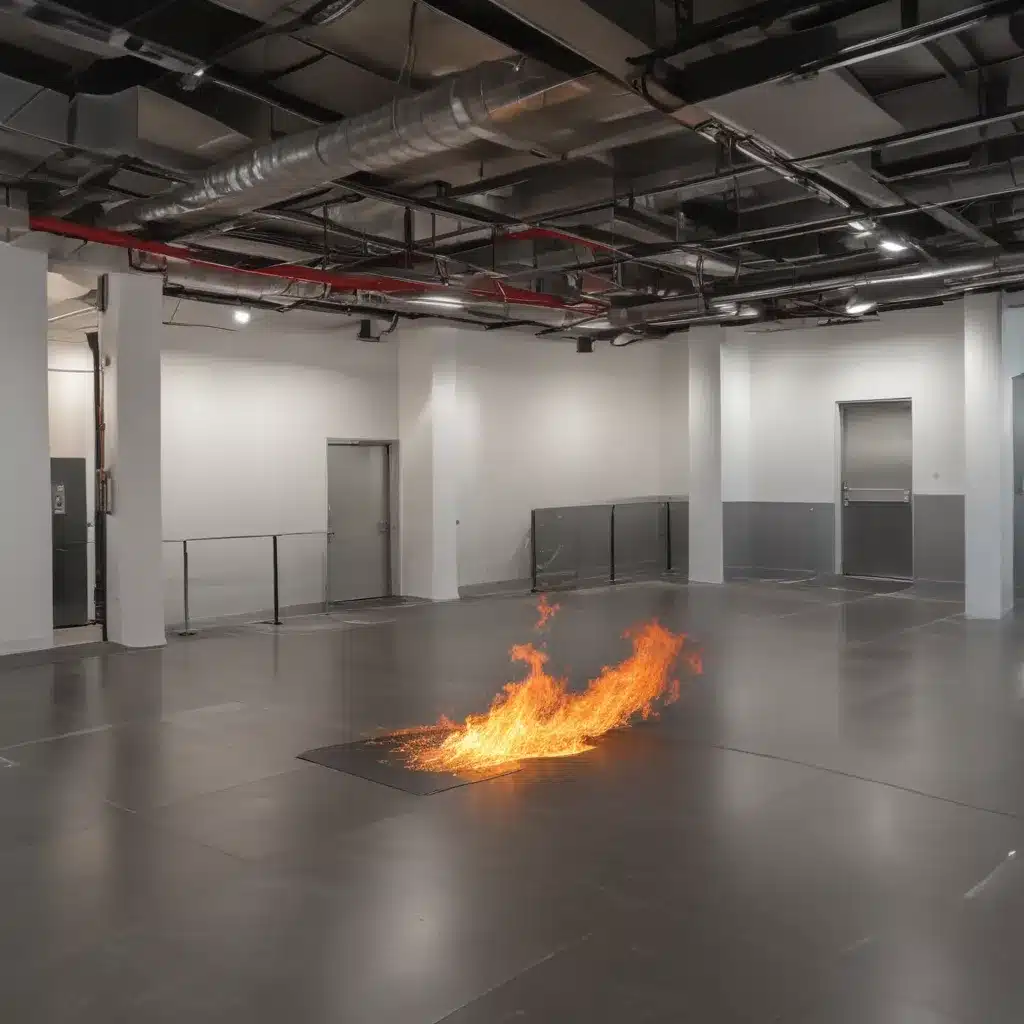
Raised access flooring systems have become an increasingly popular choice for modern commercial and office environments throughout the UK. These versatile floor systems offer benefits such as flexible cable management, improved air distribution, and easy access to building services – all while providing a robust, durable surface. However, ensuring the fire safety of raised floors is a critical consideration that demands special attention.
In today’s fast-paced, technology-driven workplaces, the risk of fire has only heightened. Electrical cables, equipment, and flammable furnishings concealed beneath raised floors create potential ignition sources and fuel loads that must be properly mitigated. Equally important is safeguarding building occupants by maintaining clear evacuation routes and preventing the spread of smoke and fire. Fortunately, innovative design approaches and the latest advancements in material science are empowering raised flooring manufacturers to elevate fire safety standards.
Fire-Resistant Panels and Pedestals
At the foundation of a robust fire safety strategy for raised floors are the flooring panels and supporting pedestals. Specifying panels constructed with inherently fire-resistant materials is crucial. Many manufacturers now offer access floor panels that utilize calcium sulphate, Portland cement, or other non-combustible compositions to achieve high fire resistance ratings.
These panels are tested and certified to meet stringent fire safety standards, such as the BS EN 13501-1 classification for reaction to fire. By resisting ignition and limiting flame spread, they help prevent fires from taking hold within the concealed plenum space beneath the raised floor. Pairing fire-resistant panels with equally durable, non-combustible pedestal systems further enhances the overall fire safety of the access flooring assembly.
Compartmentalization and Zoning
Beyond the floor components themselves, the layout and design of the raised flooring system plays a pivotal role in fire safety. Implementing compartmentalization strategies through the strategic placement of fire barriers and dampers can dramatically improve containment. Dividing the concealed plenum into discrete zones using materials like fire-resistant sealants and intumescent dampers helps to restrict the spread of fire and smoke. This compartmentalization approach aligns with the principles of passive fire protection, slowing the progress of a blaze and buying critical time for occupant evacuation.
Integrated Fire Detection and Suppression
While passive fire protection measures are essential, active systems for early fire detection and suppression are equally vital. Raised flooring systems can be engineered to incorporate advanced smoke and heat detectors that rapidly identify the presence of fire. These detectors can then trigger automatic fire sprinkler systems or clean agent fire suppression systems located within the plenum space.
Integrating such active systems directly into the raised flooring design allows for heightened responsiveness and better protection of the concealed building services. Sprinklers situated below the access floor can quickly extinguish or contain a fire, while clean agent systems discharge environmentally-friendly gases that suppress flames without water damage.
Electrostatic Discharge Control
Another often overlooked, yet crucial, aspect of fire safety in raised flooring is electrostatic discharge (ESD) control. The static electricity that can build up on the floor surface poses a significant ignition risk, potentially triggering fires from sparks or small electrical discharges. Raised flooring manufacturers have developed innovative solutions to mitigate this threat, incorporating conductive or anti-static materials into their panel and pedestal designs.
These ESD-control features work in conjunction with grounding systems to safely dissipate static charges, preventing the accumulation of dangerous levels of electricity. By ensuring the entire raised flooring assembly is properly grounded, the risk of electrostatic discharge-induced fires is dramatically reduced.
Compliance with Regulatory Standards
Underpinning all of these fire safety innovations are the regulatory standards and guidelines that raised flooring systems must adhere to. In the UK, the most relevant standards include BS EN 12825 for the structural testing and classification of access floors, and BS 6266 for fire performance requirements.
Manufacturers must demonstrate compliance with these standards through rigorous third-party testing and certification. This ensures that access floors meet or exceed the necessary thresholds for fire resistance, reaction to fire, smoke emission, and other critical safety metrics. Selecting raised flooring products that are fully compliant with these standards is essential for ensuring the overall fire safety of a building.
Maintenance and Long-Term Performance
Fire safety in raised flooring systems is not just about the initial design and installation – it also depends on the ongoing maintenance and care of these critical building components. Regular inspections, cleaning, and servicing of the access floor are necessary to uphold fire safety integrity over the long term.
Manufacturers provide detailed maintenance protocols covering everything from panel removal and pedestal adjustment to the proper handling of fire barriers and suppression systems. Adhering to these best practices helps to preserve the fire resistance and compartmentalization properties of the raised flooring, ensuring the system continues to meet regulatory requirements and provide optimal protection.
Conclusion
As raised access flooring systems become increasingly ubiquitous in modern commercial and office environments, the imperative to prioritize fire safety has never been greater. Through innovative design approaches, advanced material technologies, and robust regulatory compliance, manufacturers are elevating the fire safety standards for these versatile floor systems.
By specifying fire-resistant panels and pedestals, implementing compartmentalization strategies, integrating active detection and suppression systems, and controlling electrostatic discharge, raised flooring can deliver both functional benefits and the highest levels of fire safety. Coupled with diligent long-term maintenance, these comprehensive fire safety measures safeguard building occupants, protect critical infrastructure, and uphold the integrity of the overall built environment.
To learn more about enhancing fire safety in your raised flooring project, visit Raised Flooring UK.

