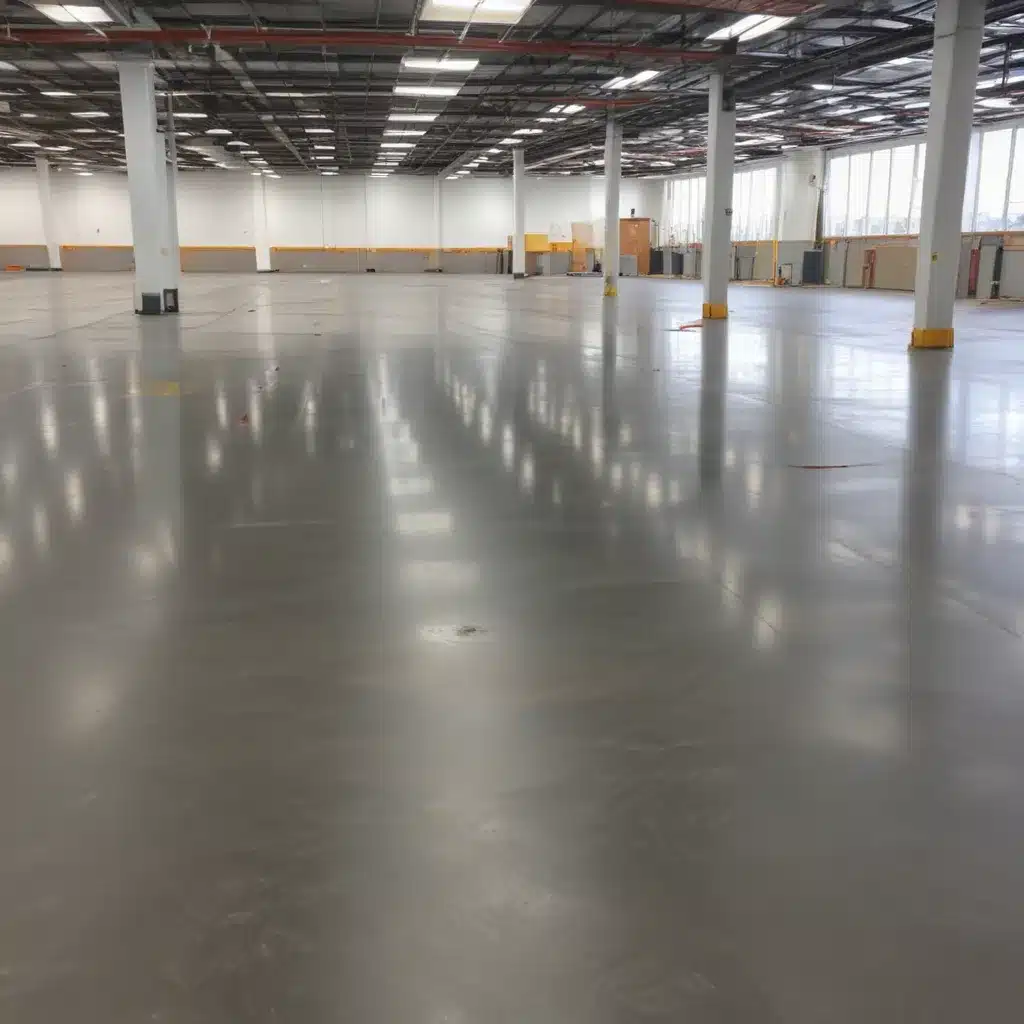
Evaluating the Benefits of Raised Floors for UK Industrial Facilities
As an experienced raised flooring consultant, I’ve had the privilege of working with a wide range of commercial and industrial clients across the UK. Time and again, I’ve witnessed the remarkable benefits that raised access flooring systems can bring to modern industrial facilities. From enhanced cable management and flexible HVAC integration to superior load capacity and long-term durability, the advantages of raised floors are truly transformative.
Structural Considerations
The foundation of any successful raised flooring system lies in its structural integrity. Load capacity is a critical factor, as industrial environments often demand the ability to withstand heavy machinery, racking systems, and the constant flow of foot traffic and material handling equipment.
Elevated floors in UK industrial facilities need to be engineered to handle static loads of up to 30 kN/m² and dynamic loads of 4.5 kN. To achieve this, raised access flooring systems typically incorporate robust steel encapsulated panels with a variety of infill materials, such as cementitious or calcium sulphate. The choice of panel composition can significantly impact both the load-bearing capacity and the acoustic performance of the floor.
Just as important as the panels themselves are the access floor pedestals that support the entire system. Adjustable pedestals allow for precise leveling and alignment, essential for creating a perfectly flat and stable surface. This attention to detail helps mitigate potential hazards, improve equipment functionality, and enhance the overall user experience.
Functional Benefits
One of the primary advantages of raised access flooring in industrial settings is the ability to seamlessly integrate critical building services. By creating a void space, the floor can serve as a flexible conduit for electrical, data, and HVAC systems, allowing for easy access and reconfiguration as needs evolve.
This cable management capability is particularly valuable in data-intensive facilities, where the demand for power, cooling, and high-speed connectivity is constantly increasing. Raised floors enable a clean, organized, and future-proof approach to housing and distributing these essential services.
Moreover, the integrated air plenum beneath the raised floor can be leveraged for efficient thermal regulation, with cooled or heated air being directed precisely where it’s needed. This can lead to significant energy savings and improved occupant comfort, especially in large, open-plan industrial spaces.
Accessibility is another key benefit of raised access flooring. The modular nature of these systems allows for easy reconfiguration and expansion, making them well-suited to accommodate changes in workflow, equipment layouts, and staffing requirements. This flexibility helps industrial facilities maintain optimal operational efficiency over the long term.
Environmental Factors
Sustainability and environmental performance are becoming increasingly important considerations for industrial facility owners and operators in the UK. Raised access flooring can contribute to these goals in several ways.
Thermal regulation plays a crucial role in energy efficiency, as the air plenum and precisely targeted HVAC distribution reduce the overall heating and cooling demands of the building. Additionally, the modular design of raised floors allows for easy removal, relocation, and reuse, minimizing waste during refurbishments or tenant changes.
Acoustics are another critical factor, especially in noisy industrial environments. Raised access floors can incorporate specialized sound-dampening materials to absorb unwanted noise and create a more comfortable working atmosphere for employees.
Regulatory compliance is also a key consideration for industrial facilities. Raised access flooring systems in the UK must meet or exceed the requirements set forth in BSEN 12825, the European standard for raised access floors. This includes provisions for load-bearing capacity, fire resistance, and other safety-critical performance metrics.
Maintenance and Durability
The long-term performance and cost-effectiveness of a raised access flooring system are heavily dependent on its maintenance and durability. Fortunately, these systems are designed with ease of access and replacement in mind, simplifying the cleaning and upkeep process.
Individual floor panels can be easily lifted and removed, allowing for thorough vacuuming and removal of accumulated dust and debris. This proactive maintenance helps to ensure the system’s structural integrity and aesthetic appeal over its lifetime.
In terms of durability, high-quality raised access floors in the UK are commonly backed by comprehensive 10-year warranties. This reflects the inherent robustness of the materials and construction, as well as the manufacturer’s confidence in the system’s long-term performance. Proper installation and ongoing care are essential to maximizing the lifespan of these investments.
Design and Installation
The modular nature of raised access flooring systems lends itself to a scalable and customizable design approach. Panels can be configured in various sizes and finishes to meet the specific requirements of each industrial facility, ensuring a seamless integration with the existing architecture and workflows.
Careful subfloor preparation is crucial to the successful installation of a raised floor system. This may involve leveling the concrete base, installing a vapor barrier, or addressing any uneven surfaces that could compromise the integrity of the access floor. Experienced installation teams work closely with clients to ensure a smooth and efficient process.
Cost-Benefit Analysis
When evaluating the merits of raised access flooring for industrial facilities, it’s essential to consider the life-cycle costs and potential long-term savings. While the initial investment may be higher than traditional flooring solutions, the benefits can result in substantial returns over time.
Energy efficiency, through optimized HVAC distribution and thermal regulation, can lead to significant reductions in operating costs. Furthermore, the flexibility and reconfigurability of raised floors can enhance productivity and workflow efficiency, ultimately boosting the facility’s overall profitability.
Emerging Trends
As sustainability and technological advancements continue to shape the industrial landscape, raised access flooring systems are evolving to meet these emerging needs. Sustainability initiatives, such as the use of recycled or renewable materials, are becoming increasingly common, aligning with the UK’s commitment to net-zero emissions.
Moreover, the integration of intelligent flooring systems is an exciting development, leveraging sensors and data analytics to optimize building performance, monitor environmental conditions, and enhance occupant well-being. These innovative solutions can provide valuable insights and contribute to the overall efficiency and responsiveness of industrial facilities.
Raised access flooring has proven to be a game-changer for UK industrial facilities, offering a versatile and future-proof solution that addresses a wide range of operational and environmental considerations. By carefully evaluating the structural, functional, and cost-benefit factors, industrial facility owners and managers can make informed decisions that will positively impact their operations for years to come.
For more information on raised access flooring solutions, visit raised-flooring.co.uk.Tip: Always verify floor load ratings with structural engineers

