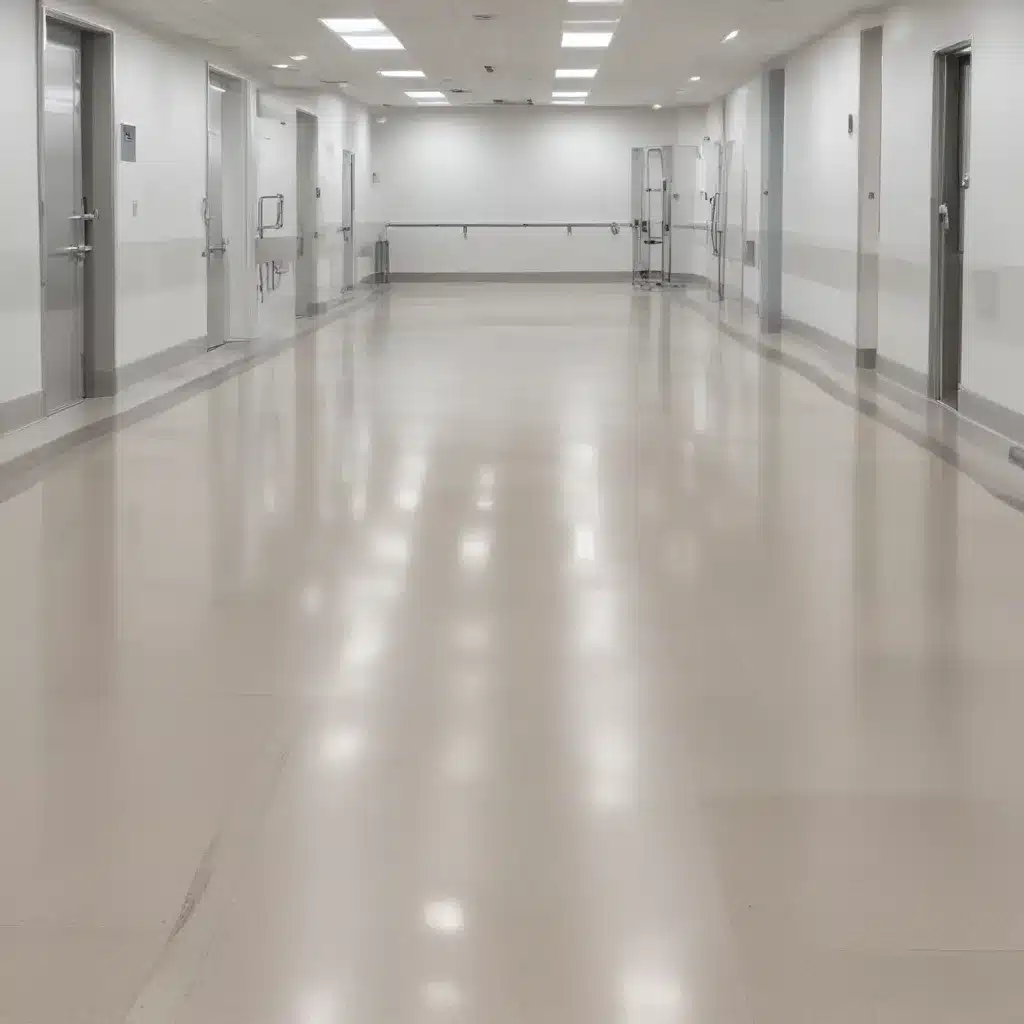
Proactive Maintenance Strategies for Extending Raised Flooring Lifespan in Healthcare Facilities
Raised access flooring systems have become a staple in modern healthcare facilities, providing adaptable, high-performance solutions for critical infrastructure like medical equipment, IT networks, and HVAC distribution. However, maintaining these complex systems requires a proactive, multi-faceted approach to ensure optimal performance, safety, and longevity.
As an experienced raised flooring consultant, I’ve witnessed firsthand the significant impact that effective maintenance strategies can have on extending the lifespan of these mission-critical assets. In this comprehensive guide, I’ll explore the key elements of proactive maintenance for raised access flooring in healthcare settings, addressing design considerations, installation best practices, cost optimization, and regulatory compliance.
Designing for Durability
At the heart of any long-lasting raised flooring system is a thoughtful, well-executed design. When specifying raised access flooring for a healthcare facility, it’s essential to carefully evaluate the load-bearing capacity requirements, which can vary significantly based on the intended use and equipment loads.
Steel encapsulated panels, for example, offer superior durability and load-bearing capabilities compared to standard cementitious or wood core options. By encasing the core in a protective steel shell, these panels can withstand heavy rolling loads from mobile medical equipment like MRI machines or surgical robots.
Equally important is the pedestal adjustment range, which allows for precise leveling to accommodate uneven subfloors and maintain a flat, stable surface. Healthcare facilities often require tighter dimensional tolerances to ensure accessibility, infection control, and the proper integration of critical building services.
Maintaining a Resilient Subfloor
The subfloor infrastructure that supports the raised access flooring is just as crucial as the panels themselves. Effective cable management, seamless HVAC integration, and a robust electrical distribution system are all vital components of a resilient healthcare environment.
Raised floors provide the perfect medium for routing a multitude of essential services, from power and data cables to HVAC ductwork. By carefully planning the layout and accessibility of these subfloor elements, maintenance teams can quickly address issues or make modifications without disrupting day-to-day operations.
Additionally, the subfloor should be designed to facilitate thorough cleaning and disinfection. Recessed access panels, for example, allow maintenance staff to reach and maintain the critical components beneath the floor, helping to preserve a sterile environment.
Proactive Maintenance Strategies
Implementing a comprehensive, proactive maintenance program is the key to maximizing the lifespan and performance of raised access flooring systems in healthcare facilities. This approach goes beyond just reacting to problems as they arise; it involves carefully monitoring conditions, addressing potential issues before they escalate, and continuously optimizing the system’s efficiency.
Preventive Maintenance Schedules
Establishing preventive maintenance schedules is a core component of this proactive strategy. By regularly inspecting, cleaning, and servicing the raised flooring system according to a predetermined timetable, maintenance teams can identify and address problems early, mitigating the risk of more severe, disruptive failures.
These schedules should cover a wide range of tasks, from inspecting the panels for signs of wear or damage to checking the integrity of the subfloor infrastructure and ensuring proper cable management. Adhering to manufacturer recommendations and industry best practices is crucial for developing an effective preventive maintenance program.
Condition-Based Monitoring
Taking a condition-based monitoring approach can further enhance the reliability and longevity of a raised access flooring system. By utilizing real-time sensor data and predictive analytics, maintenance teams can identify subtle changes in the system’s performance that could indicate an impending issue.
For example, monitoring the load-bearing capacity of individual panels or the stability of the pedestals can help predict when components may need to be serviced or replaced, preventing unexpected failures. This proactive, data-driven approach allows healthcare facilities to optimize maintenance schedules, reduce unplanned downtime, and extend the overall lifespan of their raised flooring investment.
Responsive Repair Protocols
Even with a robust preventive maintenance program in place, issues may still arise that require responsive, corrective action. Developing clear repair protocols and empowering maintenance teams to act quickly can minimize the impact of these unforeseen problems.
This might involve maintaining a comprehensive inventory of spare parts, training staff on efficient troubleshooting and repair techniques, and establishing streamlined communication channels to promptly address any concerns. By implementing these responsive measures, healthcare facilities can quickly restore their raised flooring systems to optimal working condition, ensuring continuous support for mission-critical operations.
Regulatory Compliance Considerations
Raised access flooring systems in healthcare settings must not only be durable and well-maintained but also comply with a range of industry regulations and standards. Adhering to these requirements is essential for ensuring patient safety, infection control, and environmental sustainability.
Building Codes and Accessibility
Healthcare facilities must adhere to building codes and accessibility guidelines, such as the BSEN 12825 standard, which specifies dimensional tolerances, load-bearing capacities, and other performance criteria for raised access flooring. Proactive maintenance strategies that preserve the system’s structural integrity and dimensional stability are critical for maintaining compliance.
Infection Control and Sterility
Maintaining a sterile environment is a top priority in healthcare facilities. Raised access flooring systems must be designed and maintained to support infection control protocols, enabling thorough cleaning and disinfection to mitigate the risk of contamination. Proactive maintenance practices like regular cleaning, panel replacement, and subfloor accessibility are essential in this regard.
Sustainability and Energy Efficiency
As healthcare organizations strive to reduce their environmental impact, the energy efficiency and sustainability of their facilities have become increasingly important. Raised access flooring systems can contribute to these goals by optimizing air distribution and cable management, which can enhance HVAC performance and reduce energy consumption. Proactive maintenance that keeps these systems operating at peak efficiency is crucial for realizing these benefits.
Lifecycle Cost Management
Effective maintenance strategies play a vital role in managing the overall lifecycle cost of raised access flooring systems in healthcare facilities. By preventing premature deterioration, minimizing unplanned downtime, and optimizing energy efficiency, proactive maintenance can significantly reduce the total cost of ownership over the system’s lifespan.
Additionally, integrating raised flooring maintenance with broader facility management initiatives can help healthcare organizations streamline operations, optimize resource allocation, and ensure continuous, reliable support for mission-critical infrastructure.
Conclusion
Maintaining the long-term performance and reliability of raised access flooring systems in healthcare facilities requires a proactive, multi-faceted approach. By designing for durability, implementing comprehensive preventive maintenance schedules, leveraging condition-based monitoring, and adhering to regulatory compliance, healthcare organizations can extend the lifespan of these critical assets, ensure patient safety, and optimize operational efficiency.
Embracing these proactive maintenance strategies is essential for healthcare facilities aiming to deliver uninterrupted, high-quality care while minimizing the financial and operational impact of unexpected failures. By partnering with experienced raised flooring consultants, healthcare organizations can confidently navigate the complexities of system design, installation, and long-term maintenance, ultimately safeguarding their investment and supporting their broader mission.
For more information on optimizing your healthcare facility’s raised access flooring systems, visit http://raised-flooring.co.uk/.

